Service
Rug Care
Wool, silk and specialty rugs treated as textiles, not as floor covering.
An area rug is not carpet that happens to be loose. It usually has natural dyes, a cotton or jute foundation, and no pad underneath, which means it holds far more dry soil per square foot than anything fixed down — and it will bleed, shrink or brown if it is cleaned the way a synthetic broadloom is.
Dry time
In-home cleaning 6–12 hours. Some rugs are better taken away — we will say so.
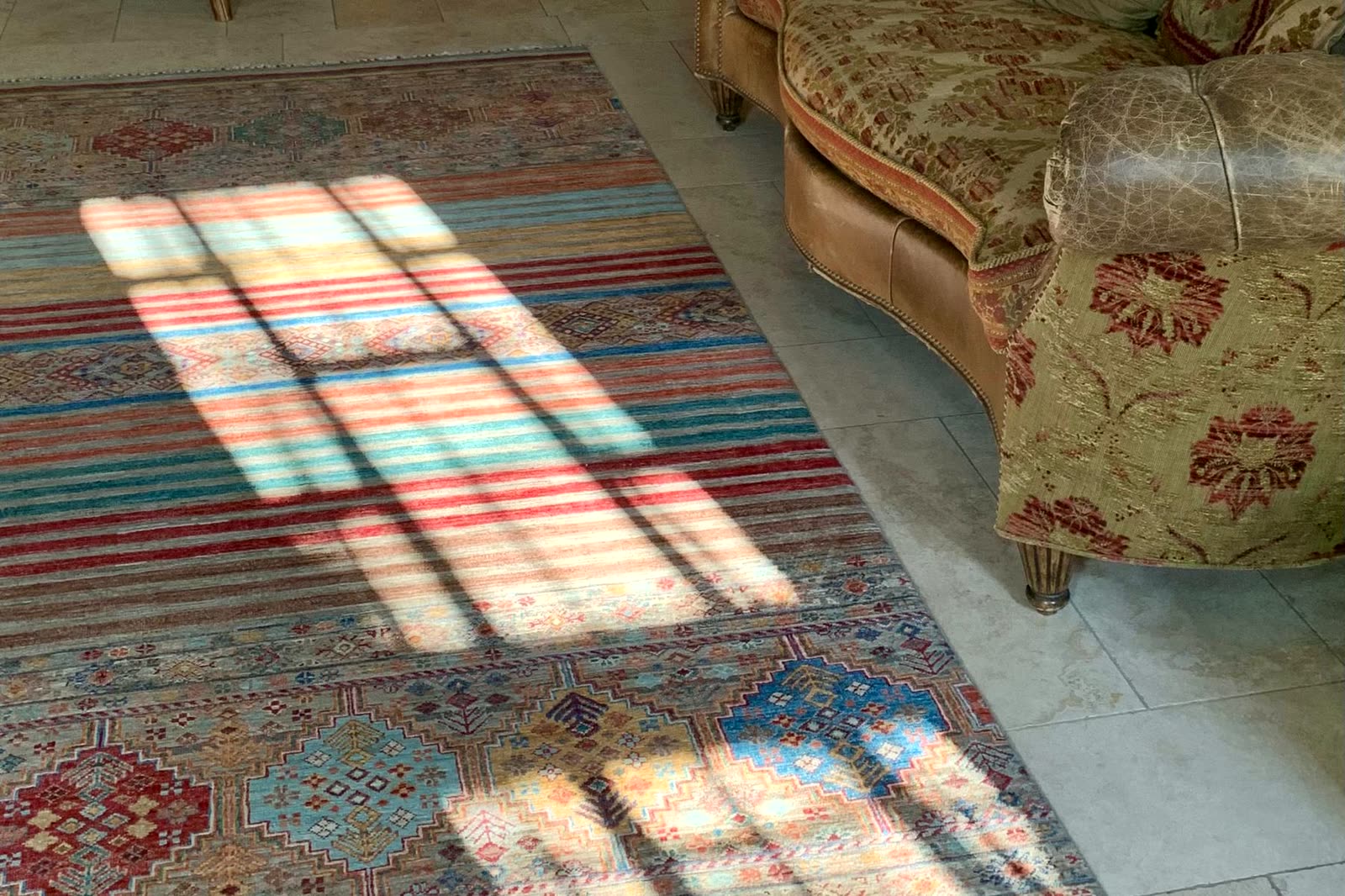
- Wool
- Hand-knotted
- Runners
- Nursery rugs
- Pet damage
The method
Step by step, and why each one matters.
Any of these can be skipped to save fifteen minutes. Skipping them is the difference between a clean that lasts a year and one that lasts a month.
- 01
Identify
Wool, silk, viscose, cotton, jute or synthetic — and hand-knotted, tufted or machine-woven. Viscose in particular is easy to ruin.
- 02
Dust
The step that matters most and is almost never done. Pounds of dry grit can come out of a rug before it is ever wet.
- 03
Test the dyes
Every color, individually. Reds and indigos move first.
- 04
Wash gently
Neutral to slightly acidic, cool, and never aggressive on a natural fiber.
- 05
Dry fast and flat
Speed of drying is what prevents cellulosic browning on cotton foundations.
Included as standard
Every one of these, every time.
None of it is an add-on and none of it appears on your bill as a line item you did not expect.
- Fiber and construction identification before any water
- Dye-bleed testing on every color in the rug
- Deep dry-soil removal from both faces
- Gentle, pH-appropriate wash for the fiber
- Controlled drying, flat or hung as the construction requires
- Fringe detailed by hand where present
Also available